
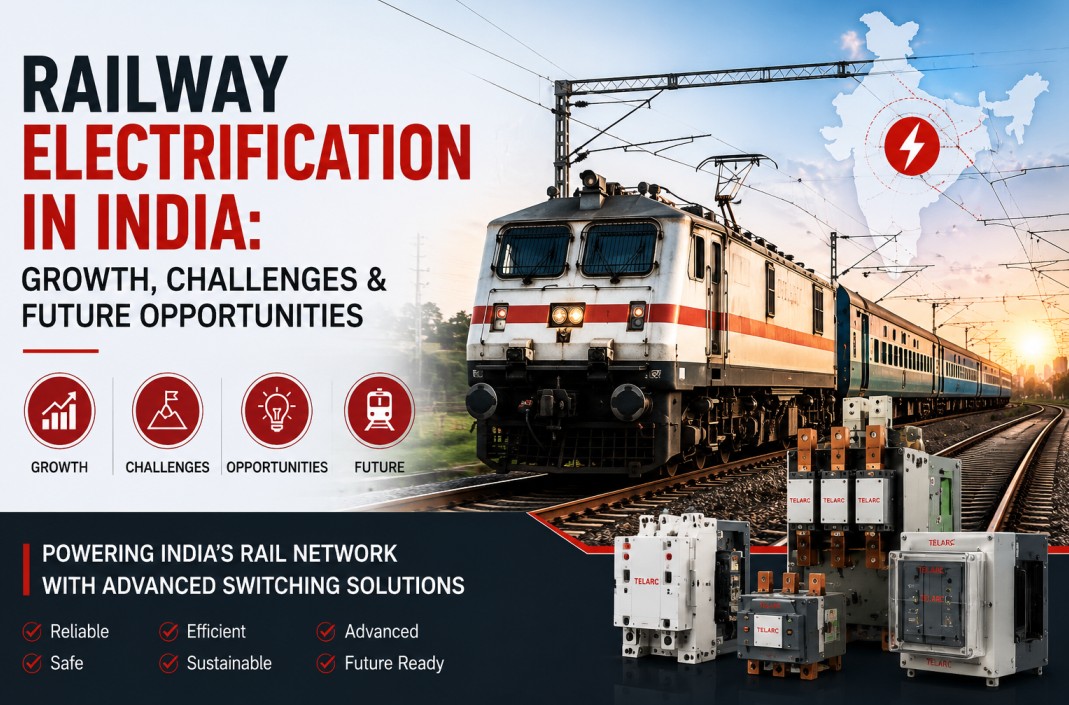
Railway electrification has become one of the most significant infrastructure developments in India over the past decade. As Indian Railways continues its journey toward becoming a more sustainable, efficient, and environmentally friendly transportation network, electrification plays a crucial role in reducing dependency on fossil fuels while improving operational efficiency.
With one of the largest railway networks in the world, India is rapidly transforming its transportation infrastructure through extensive electrification projects. This transformation is creating new opportunities for advanced electrical components, switching solutions, and railway technology providers that support modern rail operations.
The Growth of Railway Electrification in India
Indian Railways has made remarkable progress in railway electrification over the last few years. The Government of India has prioritized the modernization of railway infrastructure to improve speed, efficiency, and sustainability.
The primary objectives of railway electrification include:
- Reducing fuel costs
- Lowering carbon emissions
- Enhancing operational efficiency
- Increasing train speeds
- Improving energy security
- Reducing dependence on imported diesel fuel
Today, a significant portion of India’s broad-gauge railway network has already been electrified, making Indian Railways one of the fastest-growing electrified railway systems globally.
Benefits of Railway Electrification
1. Improved Energy Efficiency
Electric locomotives are significantly more energy-efficient than diesel-powered trains. They offer better acceleration, higher hauling capacity, and lower operating costs.
2. Reduced Carbon Footprint
Electrification contributes to India’s sustainability goals by reducing greenhouse gas emissions and supporting cleaner transportation systems.
3. Lower Maintenance Costs
Electric locomotives generally require less maintenance than diesel engines, resulting in lower lifecycle costs and improved reliability.
4. Enhanced Operational Performance
Electrified railway routes enable higher speeds, increased freight capacity, and improved schedule reliability, benefiting both passengers and freight operators.
Key Electrical Components Used in Railway Electrification
Modern railway systems depend on various electrical switching and protection devices to ensure safe and reliable operations.
Some of the critical components include:
Contactors
Contactors are used to control high-power electrical circuits in locomotives, traction systems, and auxiliary equipment. They play a vital role in switching and controlling electrical loads.
Disconnectors
Disconnectors provide safe isolation of electrical circuits during maintenance and emergency situations, ensuring personnel safety and system reliability.
High-Speed Circuit Breakers
These devices protect railway electrical systems against overloads, short circuits, and electrical faults, minimizing downtime and preventing equipment damage.
DC High Voltage Relays
DC HV Relays are widely used in traction systems and railway power electronics to ensure safe and efficient switching operations.
Challenges Facing Railway Electrification
Despite substantial progress, several challenges continue to impact railway electrification projects across India.
Infrastructure Development
Large-scale electrification requires significant investment in substations, overhead equipment, transmission systems, and signaling infrastructure.
Supply Chain Constraints
The growing demand for railway electrical components creates pressure on manufacturers and suppliers to meet stringent quality and delivery requirements.
Technological Upgradation
As railway systems become more advanced, there is an increasing need for modern electrical switching solutions capable of handling higher performance requirements.
Maintenance and Reliability
Maintaining extensive electrified networks requires robust monitoring systems, high-quality components, and skilled technical personnel.
The Role of Advanced Switching Solutions
Reliable electrical switching solutions form the backbone of modern railway infrastructure. Components such as contactors, disconnectors, relays, and circuit breakers help ensure:
- Safe train operations
- Efficient power distribution
- Equipment protection
- Reduced downtime
- Enhanced system reliability
As railway networks continue to expand and modernize, the demand for high-performance switching technologies is expected to grow significantly.
Future Opportunities in Railway Electrification
The future of railway electrification in India presents tremendous opportunities for manufacturers, technology providers, and infrastructure developers.
Expansion of High-Speed Rail Networks
India’s investment in high-speed rail projects will drive demand for advanced electrical switching systems and railway components.
Metro and Urban Rail Development
Rapid urbanization is fueling the expansion of metro rail systems across major cities, creating additional opportunities for electrical equipment suppliers.
Make in India and Localization
Government initiatives promoting local manufacturing are encouraging the development of indigenous railway components and electrical systems.
Renewable Energy Integration
Future railway networks are expected to integrate renewable energy sources such as solar and wind power, increasing the need for sophisticated power management and switching solutions.
Smart Rail Infrastructure
Digital monitoring, predictive maintenance, and intelligent power management systems will become increasingly important in next-generation railway networks.
How Telarc Technologies India Supports Railway Infrastructure
Telarc Technologies India Pvt Ltd delivers advanced electrical switching solutions designed for demanding railway applications. Backed by global expertise and engineering excellence, the company provides high-performance:
- Contactors
- Disconnectors
- High-Speed Circuit Breakers
- DC HV Relays
- Customized Switching Solutions
These products help improve safety, reliability, and operational efficiency across railway and industrial applications.
Conclusion
Railway electrification is transforming India’s transportation landscape and driving the modernization of one of the world’s largest railway networks. As electrification projects continue to expand, the need for reliable electrical components and advanced switching solutions will become increasingly critical.
Organizations that invest in innovative technologies, localization initiatives, and high-quality electrical infrastructure will play a vital role in supporting India’s railway growth story. With its expertise in advanced electrical switching solutions, Telarc Technologies India Pvt Ltd is committed to contributing to the future of railway electrification and sustainable transportation infrastructure.