
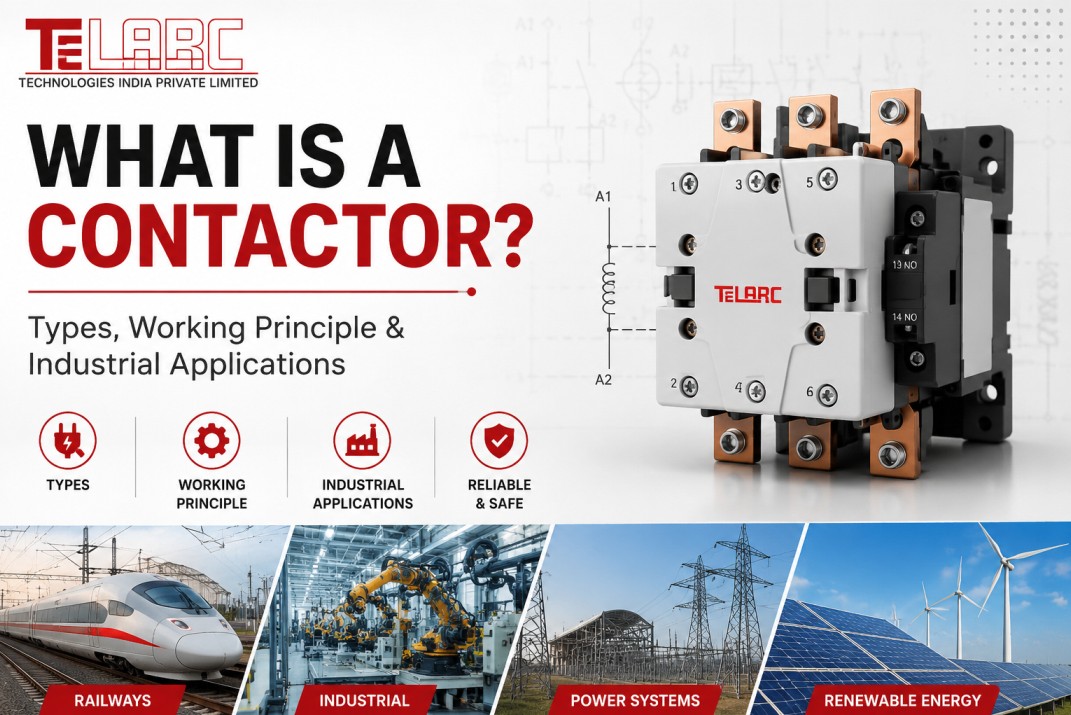
In modern electrical systems, safe and efficient switching of power circuits is essential for ensuring reliable operation. One of the most important components used for this purpose is a contactor. From railway systems and industrial machinery to renewable energy plants and power distribution networks, contactors play a critical role in controlling electrical loads.
This article explains what a contactor is, how it works, its different types, and the industrial applications where contactors are widely used.
What is a Contactor?
A contactor is an electrically controlled switching device used to connect or disconnect power circuits. It is designed to handle high-current loads and is commonly used to control motors, transformers, heating systems, lighting circuits, and other electrical equipment.
Unlike standard switches that require manual operation, contactors can be operated remotely through an electrical signal, making them ideal for automation and industrial control systems.
Key Features of a Contactor
- Remote electrical operation
- High current carrying capacity
- Reliable switching performance
- Long operational life
- Suitable for frequent switching applications
- Enhanced safety and circuit protection
How Does a Contactor Work?
A contactor operates using the principle of electromagnetism.
Working Process
Step 1: Control Signal Applied
When voltage is applied to the contactor coil, an electromagnetic field is generated.
Step 2: Magnetic Attraction
The electromagnetic force pulls the movable armature toward the fixed core.
Step 3: Contacts Close
As the armature moves, the main power contacts close, allowing current to flow through the circuit.
Step 4: Load Energized
The connected equipment, such as a motor or electrical system, begins operating.
Step 5: Signal Removed
When the control voltage is removed, the magnetic field collapses.
Step 6: Contacts Open
The spring mechanism returns the contacts to their original position, disconnecting the load from the power source.
This simple yet highly effective mechanism makes contactors ideal for controlling high-power electrical systems.
Main Components of a Contactor
A contactor typically consists of:
1. Electromagnetic Coil
Generates the magnetic field required to operate the contactor.
2. Main Contacts
Carry the primary load current.
3. Auxiliary Contacts
Used for control and signaling purposes.
4. Armature
Movable component attracted by the magnetic field.
5. Spring Mechanism
Returns the armature to its normal position when power is removed.
6. Arc Suppression System
Minimizes electrical arcing during switching operations.
Types of Contactors
Different applications require different types of contactors.
1. AC Contactors
AC contactors are designed for alternating current applications and are commonly used in:
- Industrial motors
- HVAC systems
- Pumping stations
- Manufacturing facilities
2. DC Contactors
DC contactors are specifically designed for direct current circuits where arc suppression is more challenging.
Applications include:
- Railway systems
- Battery storage systems
- Electric vehicles
- Renewable energy installations
3. Vacuum Contactors
These contactors use vacuum chambers to extinguish arcs.
Benefits include:
- Longer lifespan
- Reduced maintenance
- Improved safety
Commonly used in medium-voltage systems.
4. Magnetic Contactors
The most widely used type in industrial automation and motor control applications.
5. High-Speed Contactors
Designed for rapid switching operations where response time is critical.
Widely used in:
- Rail transportation
- Power electronics
- Energy storage systems
Advantages of Using Contactors
Enhanced Safety
Allows remote operation of electrical circuits without direct human intervention.
Reliable Switching
Provides consistent performance even under demanding operating conditions.
Longer Equipment Life
Protects electrical systems from excessive wear and frequent manual switching.
Automation Compatibility
Easily integrated into PLCs, control panels, and industrial automation systems.
High Current Capacity
Capable of handling large electrical loads safely and efficiently.
Industrial Applications of Contactors
Railway Industry
Modern railway systems rely heavily on contactors for:
- Traction systems
- Auxiliary power circuits
- Battery management
- HVAC control
- Railway electrification projects
Reliable contactors help ensure operational safety and uninterrupted rail services.
Power Generation & Distribution
Contactors are widely used in:
- Power substations
- Switchgear assemblies
- Transformer protection systems
- Load management systems
Renewable Energy
Solar and wind energy projects utilize contactors for:
- Inverter protection
- Battery energy storage systems
- DC power switching
- Grid integration
Industrial Manufacturing
Manufacturing plants use contactors for:
- Motor control
- Conveyor systems
- Compressors
- Pumps
- Industrial automation equipment
E-Mobility
Electric vehicle charging infrastructure and battery systems depend on high-performance DC contactors for safe operation.
Contactor vs Relay: What’s the Difference?
| Feature | Contactor | Relay |
|---|---|---|
| Current Capacity | High | Low |
| Application | Power Circuits | Control Circuits |
| Size | Larger | Smaller |
| Arc Suppression | Advanced | Basic |
| Industrial Usage | Extensive | Limited |
While both devices operate on similar principles, contactors are specifically designed for switching high-power loads.
Choosing the Right Contactor
When selecting a contactor, consider:
- Voltage rating
- Current rating
- AC or DC application
- Switching frequency
- Environmental conditions
- Load type
- Safety requirements
Choosing the correct contactor improves efficiency, safety, and equipment reliability.
Conclusion
Contactors are essential components in modern electrical systems, providing safe, reliable, and efficient switching of power circuits. Whether used in railway networks, industrial automation, renewable energy plants, or power distribution systems, contactors help ensure smooth operation and enhanced electrical safety.
As industries continue to adopt advanced automation and electrification technologies, the demand for high-performance contactors will continue to grow. Investing in quality switching solutions is critical for achieving long-term operational reliability and efficiency.
For advanced electrical switching solutions including contactors, disconnectors, high-speed circuit breakers, and DC HV relays, Telarc Technologies India Pvt Ltd delivers reliable technologies designed for demanding industrial and railway applications.